

Choosing a PVS-31-style night vision binocular involves more than comparing the appearance of two devices. Image intensifier tube compatibility, gain control, optical specifications and overall weight can all affect the final configuration.
The LinduNV LDNVG31 and LD-NVG32 are two PVS-31-style binocular night vision systems. Both offer dual-tube viewing, adjustable interpupillary distance and multiple image intensifier configurations.
However, there are several differences worth understanding before choosing between them.
1. LDNVG31: A Lightweight PVS-31-Style Binocular
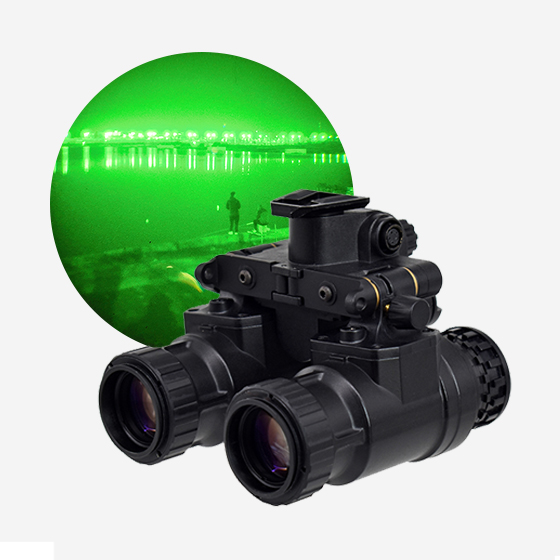
The LDNVG31 is designed as a dual-tube night vision system with a compact binocular configuration.
It uses two image intensifier tubes to provide a binocular viewing experience and supports multiple phosphor and performance configurations.
Its main features include:
- Lightweight design with a listed weight of 480 g, including image intensifier tubes.
- IP65 waterproof rating.
- Built-in 850 nm, 20 mW IR illuminator.
- ON, IR and AUTO operating modes.
- Automatic power-off when flipped up or moved aside.
- Wide interpupillary distance adjustment.
- Support for an external battery pack.
- Optional 3× and 5× magnifier lenses.
The product page lists Green and White Phosphor configurations, with FOM options ranging from 1400 to 2000.
It also mentions an optional manual gain control version. Buyers interested in this configuration should confirm its availability before ordering.
Explore LDNVG31 Night Vision Goggles →
2. LD-NVG32: More Explicit Tube Configuration Options
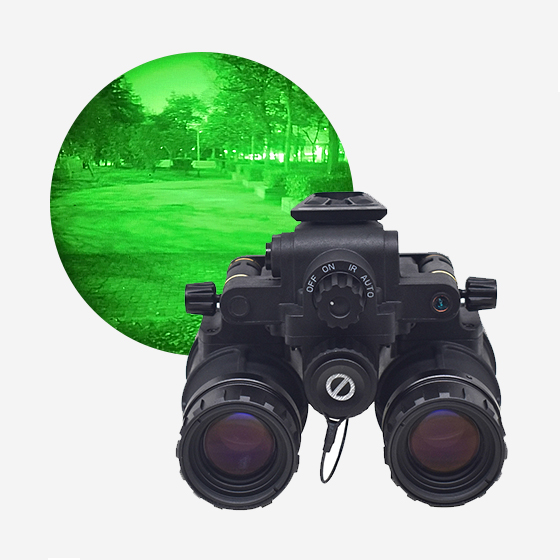
The LD-NVG32 is another PVS-31-style binocular system, with a product configuration that explicitly allows buyers to select between two image intensifier tube formats.
The available tube choices include:
- MX10160: Automatic gain control.
- MX11769: Pigtail manual gain control.
This makes the LD-NVG32 particularly relevant for buyers who want to select their preferred gain-control configuration when ordering.
Other listed features include:
- IP65 waterproof rating.
- Bright-source protection.
- Automatic brightness control.
- Automatic shutoff when flipped up.
- ON, IR and AUTO operating modes.
- 850 nm, 20 mW built-in IR illuminator.
- Adjustable interpupillary distance.
- CR123 or AA battery compatibility.
The LD-NVG32 also offers Green and White Phosphor options across the listed FOM configurations.
Explore LD-NVG32 Night Vision Goggles →
3. LDNVG31 vs LD-NVG32: Technical Comparison
The following table summarizes the specifications published on the two product pages.
| Specification | LDNVG31 | LD-NVG32 |
|---|---|---|
| Device Type | PVS-31 Style Binocular | PVS-31 Style Binocular |
| Tube Selection | Tube configurations; optional manual gain version | MX10160 / MX11769 |
| Gain Control | Automatic; manual version optional | Automatic / Manual |
| FOM Options | 1400 / 1600 / 1800 / 2000 | 1400 / 1600 / 1800 / 2000 |
| SNR Options | 23 / 25 / 28 / 28 | 23 / 25 / 28 / 28 |
| Resolution | 60 / 64 / 64 / 68 lp/mm | 60 / 64 / 64 / 68 lp/mm |
| Phosphor Options | Green / White | Green / White |
| Optical System | F1.18, 25 mm | F1.18, 25 mm |
| Optical Distortion | 1% Max. | 0.5% Max. |
| Eye Relief | 30 mm | 25–40 mm |
| IPD Range | 50–85 mm | 50–80 mm |
| IR Illuminator | 850 nm, 20 mW | 850 nm, 20 mW |
| Waterproof Rating | IP65 | IP65 |
| Listed Weight | 480 g, including tubes | 568 g |
Note: The product pages do not specify identical weighing conditions. The listed weights should therefore be treated as reference values rather than a strictly controlled comparison.
4. MX10160 vs MX11769: Understanding the Gain Control Options
One of the most important differences when configuring the LD-NVG32 is the choice between MX10160 and MX11769 image intensifier tubes.
MX10160: Automatic Gain Control
The MX10160 configuration uses automatic gain control. The tube automatically adjusts its output according to the available light conditions.
This is a straightforward configuration for buyers who prefer automatic brightness adjustment without a separate manual gain control.
MX11769: Manual Gain Control
The MX11769 pigtail configuration supports manual gain adjustment.
It allows the user to adjust image brightness through the compatible gain-control system, providing more direct control over the displayed image.
The important point is that the tube format and gain-control method should be confirmed before ordering. A housing that looks similar does not necessarily mean every tube configuration is interchangeable without checking the electrical and mechanical requirements.
For more information about the image intensifier tube options, visit our Night Vision Collection .
5. Green Phosphor or White Phosphor?
Both LDNVG31 and LD-NVG32 offer Green and White Phosphor configurations.
The choice between P43 green phosphor and P45 white phosphor changes the color presentation of the intensified image.
However, phosphor color should not be the only factor when comparing two image intensifier configurations.
Other specifications such as SNR, resolution, gain and EBI remain important when evaluating overall tube performance.
When ordering, confirm the selected phosphor type and FOM level rather than relying only on the product model name.
6. Which Model Should You Choose?
Consider the LDNVG31 If:
- You prefer its listed 480 g weight configuration.
- You want a wider listed IPD adjustment range of 50–85 mm.
- You are looking for a PVS-31-style binocular with Green or White Phosphor options.
- You want external battery pack support.
- You prefer a straightforward product configuration based on phosphor and FOM options.
The LDNVG31 is worth considering when its listed configuration and physical specifications match your requirements.
Consider the LD-NVG32 If:
- You specifically want to choose between MX10160 automatic gain and MX11769 manual gain.
- You want a clearly listed 25–40 mm eye relief range.
- You value the published 0.5% maximum optical distortion specification.
- You want to select from multiple FOM and phosphor configurations.
The LD-NVG32 is particularly relevant when tube format and gain-control selection are important parts of your purchasing decision.
7. What Should You Confirm Before Ordering?
Before purchasing either model, it is worth confirming several configuration details.
- Image intensifier tube: Confirm the tube format and whether automatic or manual gain is required.
- FOM: Confirm the selected performance level.
- Phosphor: Choose P43 green or P45 white according to your preference.
- Auto-gating: Confirm whether the selected configuration includes auto-gating.
- Power supply: Confirm battery type and compatibility before selecting external power accessories.
- Accessories: Check the compatibility of the helmet mount and other mounting components.
If you are building a complete helmet-mounted system, you can also explore our Night Vision Accessories Collection .
For more information about helmet mounting and system configuration, read our related guide: How to Build a Night Vision Helmet Setup: PVS-14 vs PVS-31 .
Final Thoughts
The LDNVG31 and LD-NVG32 are both PVS-31-style binocular night vision systems, but their configuration options are not identical.
The LDNVG31 offers a listed 480 g configuration, external battery support and multiple phosphor and FOM choices.
The LD-NVG32 provides a more explicitly defined tube selection, allowing buyers to choose between MX10160 automatic gain and MX11769 manual gain configurations.
Neither model should be selected based on its name alone. The most suitable configuration depends on the image intensifier tube, optical specifications, gain-control requirements and accessories you need.
Explore LinduNV PVS-31 Night Vision Goggles
Compare the available configurations and contact our team if you need help selecting the right image intensifier tube and accessories.
View LDNVG31 View LD-NVG32Frequently Asked Questions
Are LDNVG31 and LD-NVG32 both PVS-31-style night vision goggles?
Yes. Both are dual-tube binocular night vision systems with PVS-31-style designs.
Does the LD-NVG32 support manual gain control?
Yes. Its product configuration offers the MX11769 pigtail manual gain control option, as well as the MX10160 automatic gain option.
What phosphor options are available?
Both models list Green and White Phosphor configurations. The exact P43 or P45 option should be confirmed when placing an order.
Are both models waterproof?
Both product pages list an IP65 waterproof rating.
Can the LDNVG31 use an external battery pack?
Yes. External battery pack support is listed among the LDNVG31 features. Confirm the compatible connector and battery configuration before ordering.
Which model is lighter?
The LDNVG31 is listed at 480 g including image intensifier tubes, while the LD-NVG32 is listed at 568 g. The product pages do not specify identical weighing conditions, so confirm the configured weight before making a final comparison.
Do both models support auto-gating?
Both product pages list configurations with non-autogated and autogated options. Confirm the exact FOM and gating configuration when selecting your product.